UV Reactive Paper
In a previous post I discussed fluorescent inks that react to ultraviolet (UV) light. Part of getting the best results out of those inks is using them on paper that does not react to UV light sources itself. This gives fluorescent inks the best chance of standing out and their glow being visible under UV light.
Paper can be UV reactive for various reasons, such as from the processes manufacturers use to make the paper bright white, like bleaching. As a consequence, a good general guideline is to look for “ivory” or “cream” papers and avoid bright white paper.
There is a surprising amount of variation between brands and even different types of paper from the same brand. This post covers many of the different types of paper I have been able to try, along with photos of each under UV light. It’s more of a relative comparison and not exactly rigorously tested or scientific.
Safety
Before going any further, UV light has safety concerns that merit caution.
In this post, unless otherwise specified, “UV” refers to the UV-A portion of the ultraviolet spectrum around 315-400nm, specifically closer to 365nm as that is where most of the lights being discussed peak.
Though this “long wave” UV isn’t as harmful as other portions of the UV spectrum, it can still be harmful with prolonged skin exposure and any amount of eye exposure. Wear eye protection when using UV lights, and limit exposure where possible.
Many polycarbonate (PC) glasses block UV-A light. This includes safety glasses, and some others such as reading glasses or even eyeglasses, depending on how the lenses were made. Since these are very common, chances are high that many people already have some form of viable eye protection nearby. Try shining a UV light through glasses at a UV reactive object, if the object doesn’t react to the light through the glasses, but does when the glasses are not in front of the light, then the glasses can block UV light.
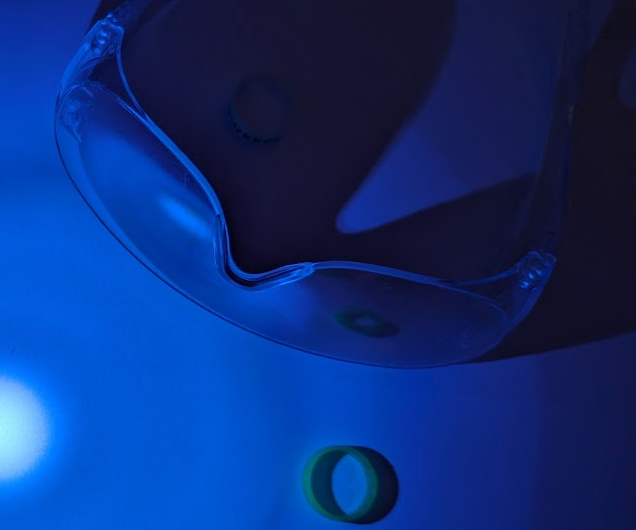
Any use of UV lights is at your own risk. Protect your eyes!
Light Sources
To get the best effect with UV reactive materials, a UV light should only emit light in the UV-A range. This can be quite difficult in practice as many lights labeled as “UV” put out a much wider range and appear to give things a purple hue in addition to whichever portion of the UV spectrum they are supposed to emit.
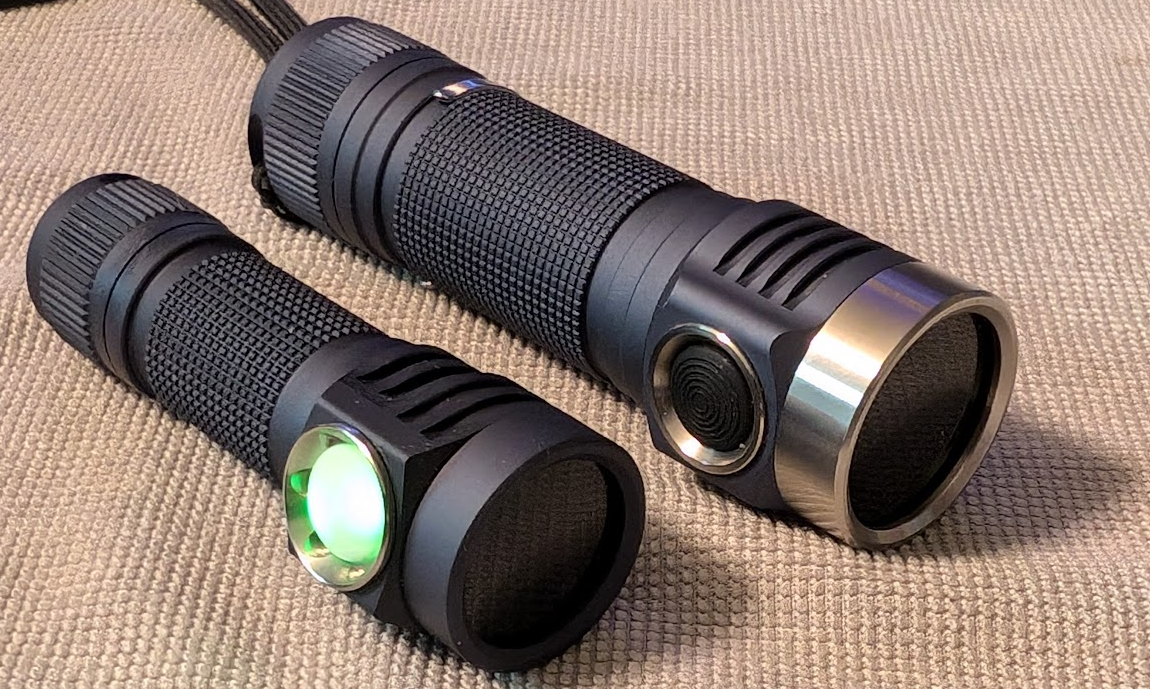
I’ll have a separate post about a selection of lights I have used and tested. Generally speaking, try to find a UV light source with a ZWB2 filter. A ZWB2 filter blocks the visible portion of the color spectrum, so only UV-A light near 365nm can pass. This allows UV reactive materials to fluoresce and shine while minimizing discoloration by non-UV wavelengths emitted by the light.
Most lights I use have ZWB2 filters, including an Emisar D4v2 UV Mule, Emisar D2 with a UV channel, and Lumintop Tool AA UV.
Methodology
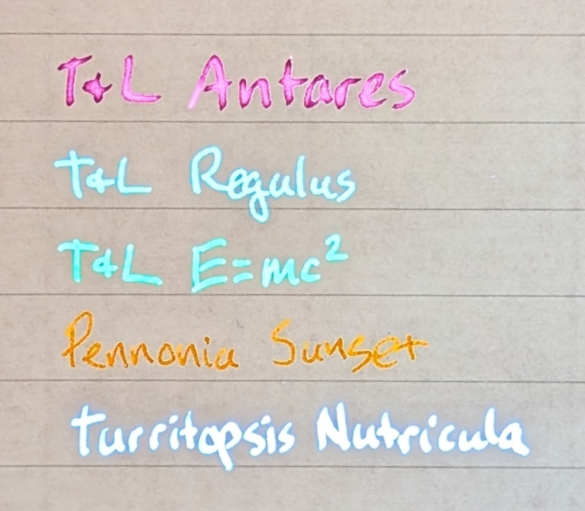
I used the same pens and fluorescent inks on each paper with some different nib types and widths:
- Tono & Lims Antares in a TWSBI ECO 1.1 Stub
- Tono & Lims Regulus in a Platinum Preppy F03
- Tono & Lims E=mc² in a Platinum Preppy F03
- Pennonia Napnyugta/Sunset in a Jinhao 20 EF
- Tramol Turritopsis Nutricula invisible ink in a TWSBI ECO 1.1 Stub
To keep things on a level playing field, I took consistent photographs of each paper. I setup a camera on a tripod and put a UV light in a clamp arm. The camera photos were all taken on a Canon EOS Rebel SL2, set to manual focus, f/5.6, 1/200 sec exposure, ISO 6400. As the settings are identical for all of the camera photos, these photos allow for direct comparison. The photos can be used to determine the result between each paper type with respect to how bright the inks and paper are, even if they don’t look the best.
I also took photos of each paper on a phone camera. While these are not as useful for direct comparison, they give a better impression of how the paper and ink combinations appear to the eye.
Each paper type listed in this post will include both the camera photo and the phone photo.
Paper Types
I have ranked the papers I was able to test from most reactive (worst) to least reactive (best).
12 - Notsu Notepad
I have a few of these Notsu tear-off notepads around because they are a convenient size, dot grid, thick paper, and reasonable friendly for fountain pens. They’re also not terribly expensive so I don’t mind leaving them around the house for general non-fountain-pen use.
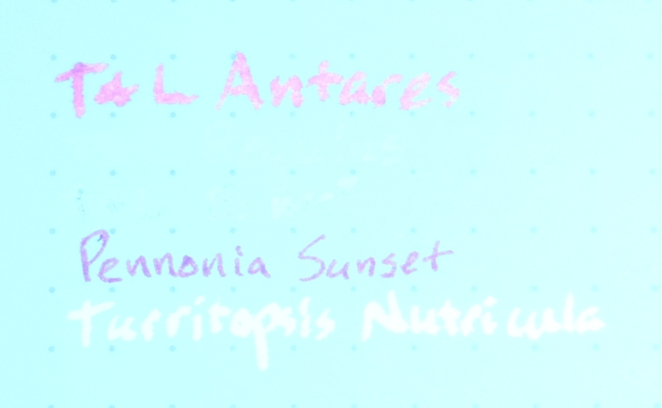
Unfortunately, the paper reacts to UV light more than any other paper I have. It’s extraordinarily bright under UV and drowns out the ink. It’s still good paper for other uses, but not with UV ink.
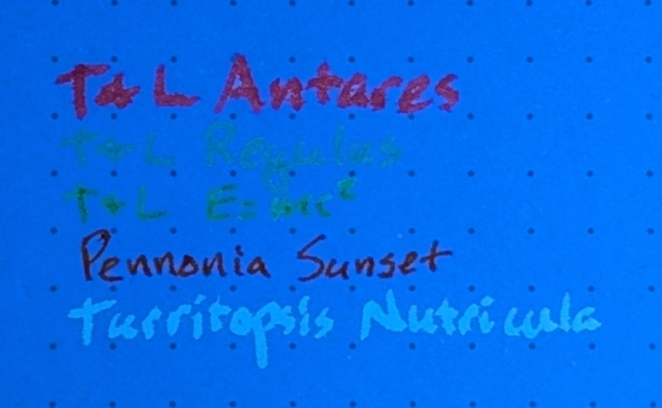
Antares and Sunset are easily readable, and Antares is visibly glowing, but the rest are barely visible. The invisible ink is somewhat readable, but not easy to see against the glowing background.
11 - Clairefontaine Triomphe - Vellum
This Clairefontaine Triomphe notepad has lined tear-off sheets of vellum paper. Clairefontaine has other types of paper as well, one of which is in another entry later in this post.
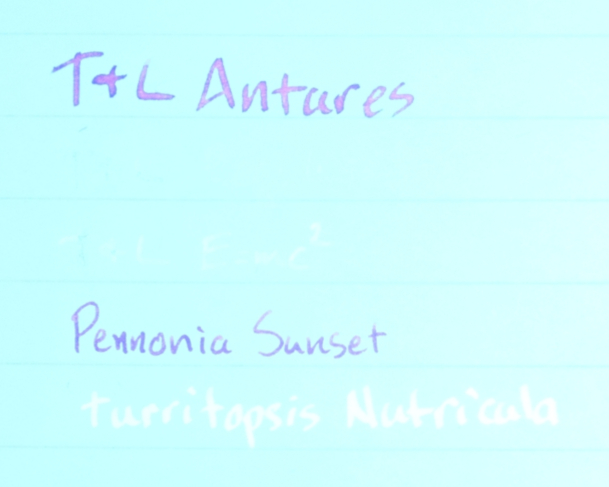
However, while it’s good for general usage, it’s not good for UV inks as it is extraordinarily reactive to UV light.
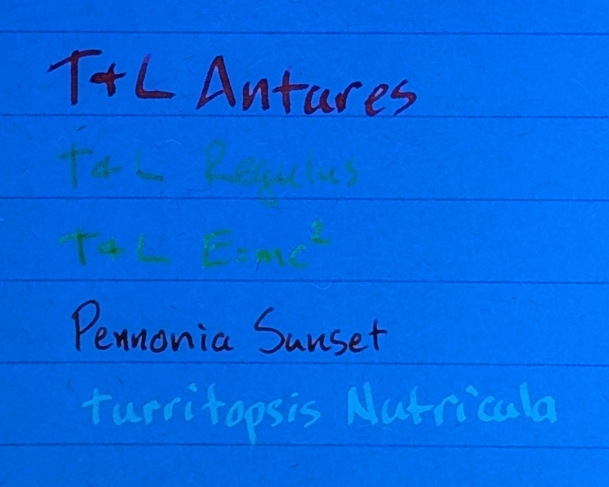
Like the previous paper, Antares and Sunset are easily readable, and Antares is visibly glowing, but the rest are barely visible. The invisible ink is slightly more legible than on the Notsu.
10 - Endless Recorder Notebook (Regalia paper)
This Endless Recorder Notebook has “Regalia” paper and is grid lined.
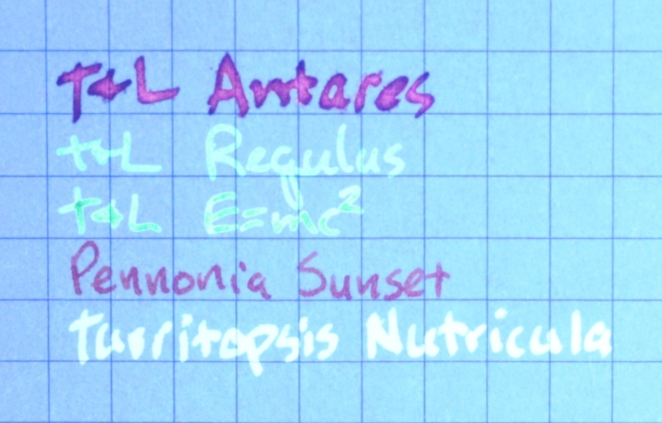
While it is fairly reactive, it is not nearly as bad as the two previous papers. The paper glows, but most inks are still quite visible.
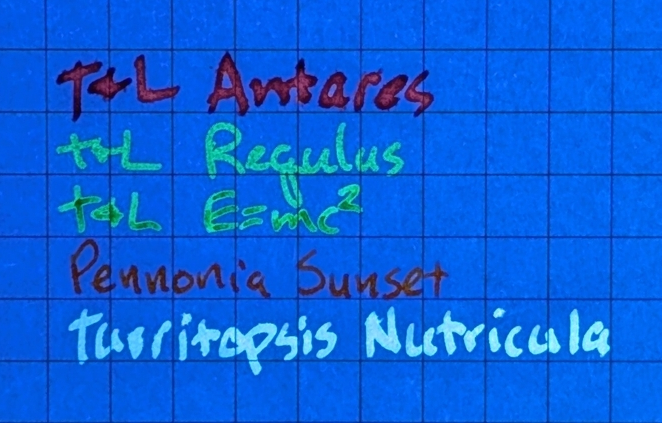
In particular, sunset is readable but doesn’t appear to be glowing. It’s not unusable, but I would not recommend it for usage with UV inks.
9 - Maruman Mnemosyne Spiral Notebook
This paper is from a Maruman Mnemosyne spiral-bound notebook. I have A5 and A6 versions of this notebook and they both perform similarly.

The glow of the paper is similar to the Endless Recorder Notebook, but the dot grid doesn’t get in the way as much.
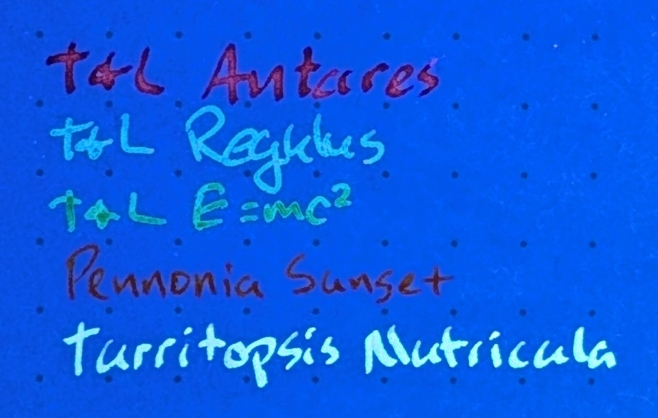
Most of the inks still were sufficiently visible. Sunset still doesn’t appear to be glowing, though.
8 - Sakae TP Iroful notebook (dot grid)
This sheet is from a Sakae TP Iroful A5 notebook with dot grid printing.
Iroful paper is remarkable in various ways, it seems to do things with ink that other papers don’t or can’t. I like using it for pretty much anything fountain pen related.
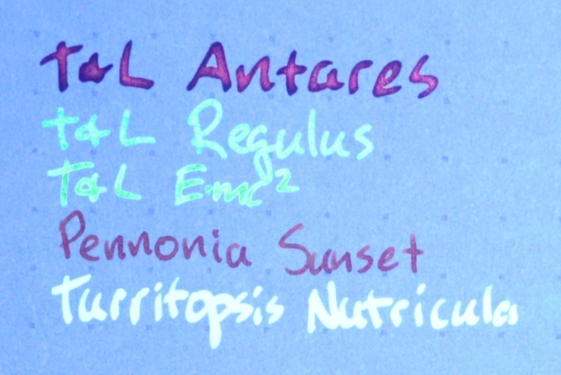
That said, it is still somewhat reactive to UV. It has slightly less glow than the papers already mentioned, though, so it’s still an improvement.

All of the inks are readable and all but Sunset are glowing. Note that Regulus is glowing more green on this paper, while it was more blue on the others.
7 - Sakae TP Iroful loose sheets (blank)
The base paper of blank Iroful loose sheets is the same as the dot grid notebook, and I almost didn’t test it, but it turned out to be another slight improvement.

Without the dot grid (or whatever process they use to print the dot grid), it reacts a tiny bit less.
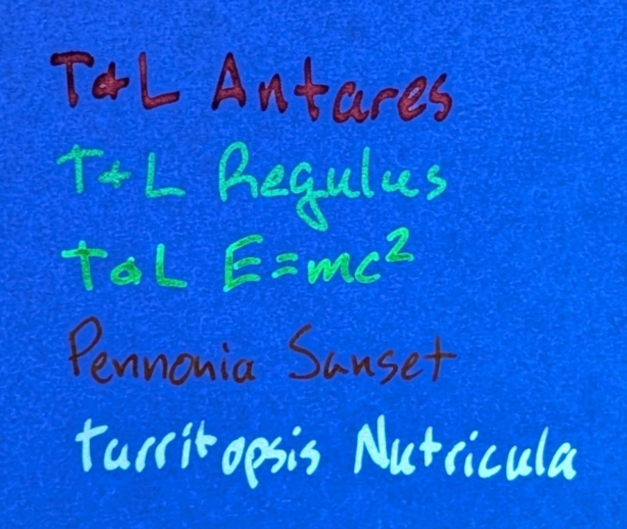
The background being smooth and empty also helps it interfere less with the ink.
6 - Clairefontaine Triomphe - Velvety Ivory
This sheet of paper is from a Clairefontaine Triomphe notebook with their “velvety ivory” paper.

This variation isn’t as white as the vellum, is much better in terms of UV reaction, and has significant overall reduction in paper glow from the previous paper.
The paper has a scattered amount of highly reactive fibers, however, which looks neat but does make it less effective than it would be otherwise. Still, with the right ink that effect can be desirable.
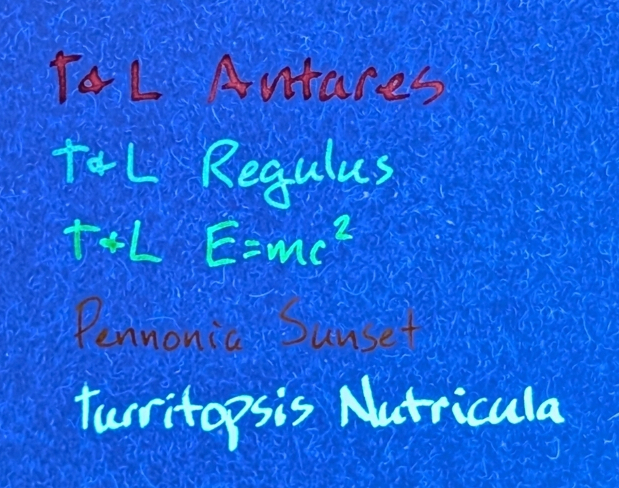
All of the inks are readable and Sunset finally appears to be glowing, albeit faintly. Regulus is back to Blue again.
5 - Midori MD Cotton tear-off pad
This sheet is from a Midori MD Cotton tear-off pad, which is a bit different from typical Midori MD paper.
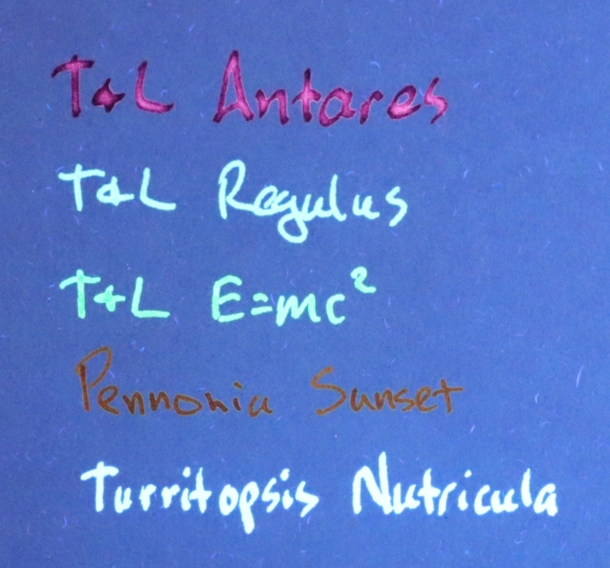
This paper offers another significant reduction in UV reaction, though there is still a faint glow. There are also some reactive fibers in the mix, but they are sparse.
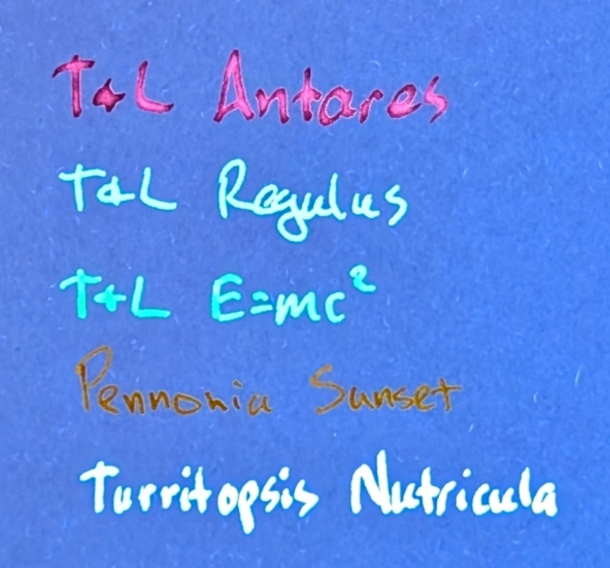
The inks are all readable and glowing, and stand out much better than the papers mentioned so far.
This is the first paper of the bunch I’d consider recommending, though there are even better options to come.
4 - Paperage Journal Notebook
This sheet is from a Paperage Journal Notebook. It’s fairly inexpensive compared to some of the other options (especially the ones below this point), has a nice hardcover, comes in a variety of colors, and so on. Not bad all around for the price.
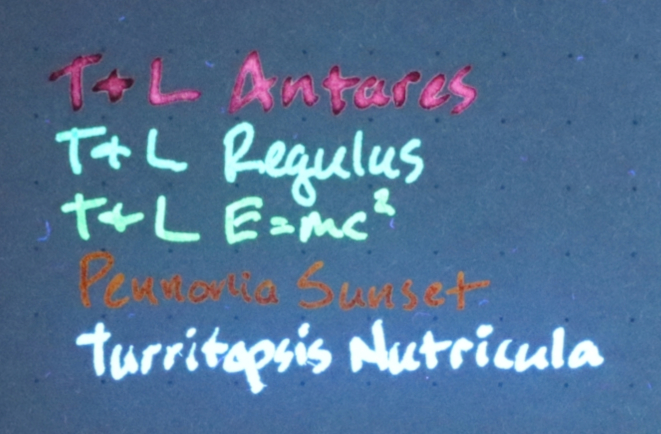
The paper has a very low reaction to UV and only a faint glow.
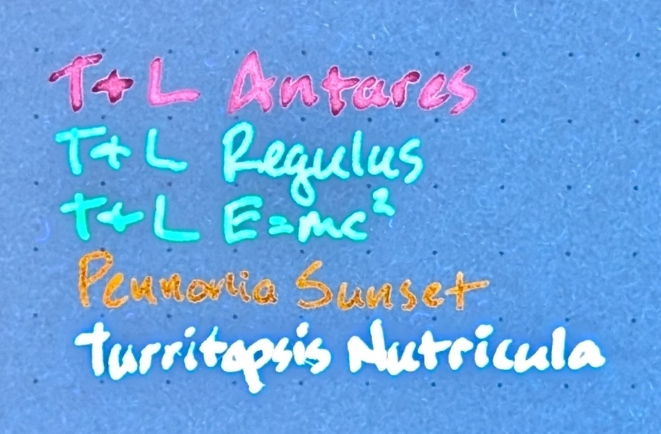
Despite the faint glow, all the inks glow much brighter than the paper. So, even if the conditions are not ideal, it hits a good price/performance balance.
3 - Midori MD Notebook
This sheet is from a Midori MD notebook, and this paper is one of my favorites for regular use. They also make a tear-off note block with the same paper, which is ideal for quick tests, making swatch cards, and so on.
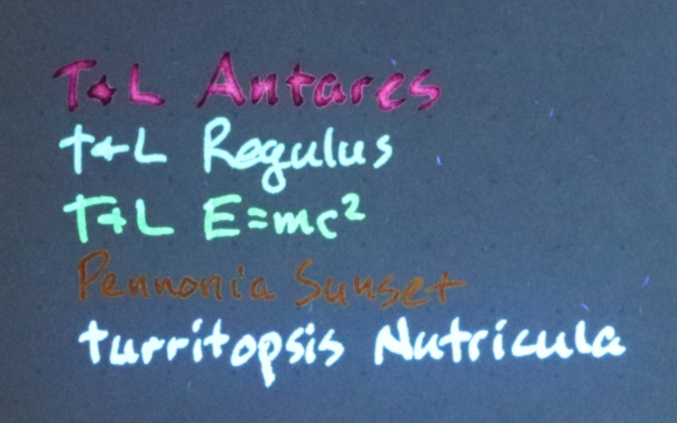
The paper has almost no perceptible reaction to UV, it has barely any glow at all.
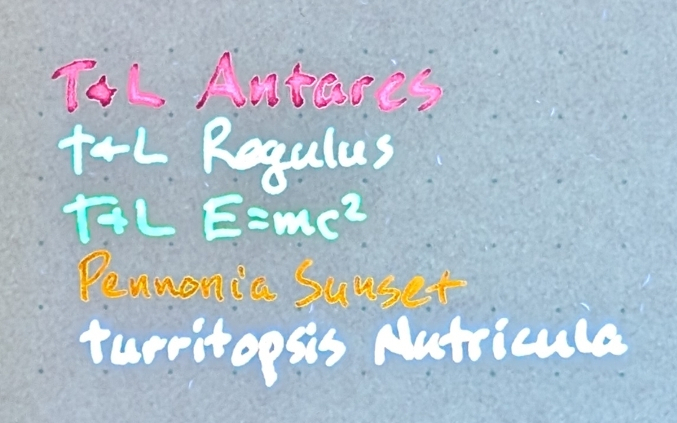
The very low reaction and minimal glow really lets fluorescent inks shine!
2 - Life Noble Note
This sheet is from a Life Noble Note notebook, which can be somewhat hard to find.

The paper itself is is darker, but ever so slightly reactive, and there are some very sparse reactive fibers. It balances out to make a fine option, though not one I prefer personally.
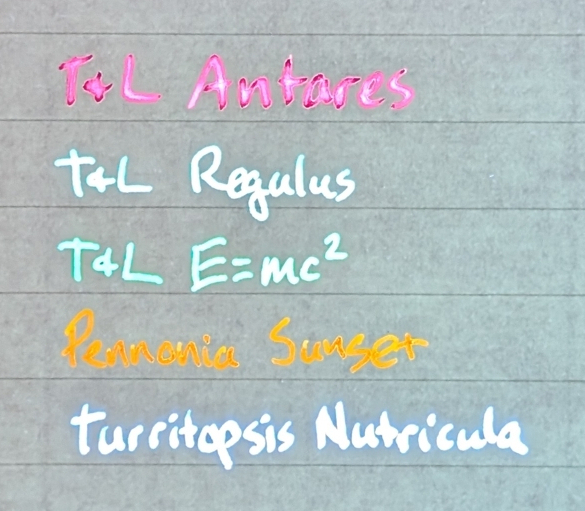
All of the inks are glowing brightly, however, and look great.
1 - Tomoe River S Kanso Notebook
This sheet is from a notebook made with Tomoe River S Kanso paper sold by JetPens under their own name. There is some concern about differences in Tomoe River paper between batches when repackaged by different places (e.g. Habonachi), so consider that when purchasing.
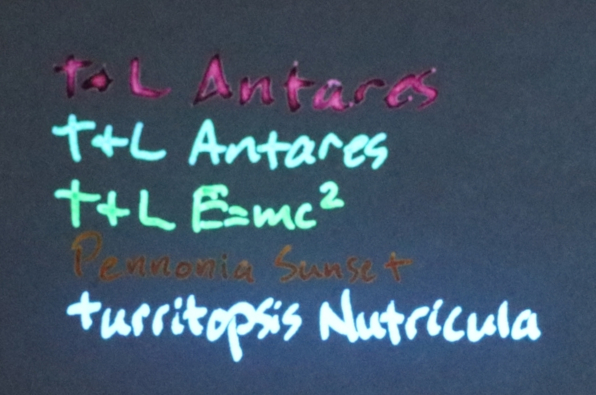
The paper has no visible reaction to UV and in my opinion it is the best choice to let fluorescent inks show off. However, it’s also a bit more expensive than the other options and each notebook would need to be checked to ensure it behaves as expected.
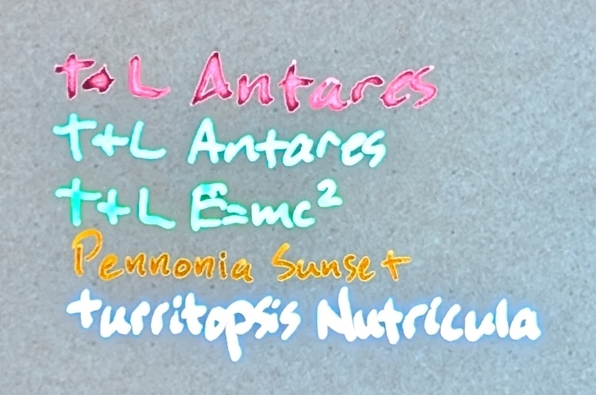
As you can probably guess, with no visible glow from the paper, the ink glows brightly and looks fantastic.
Conclusion
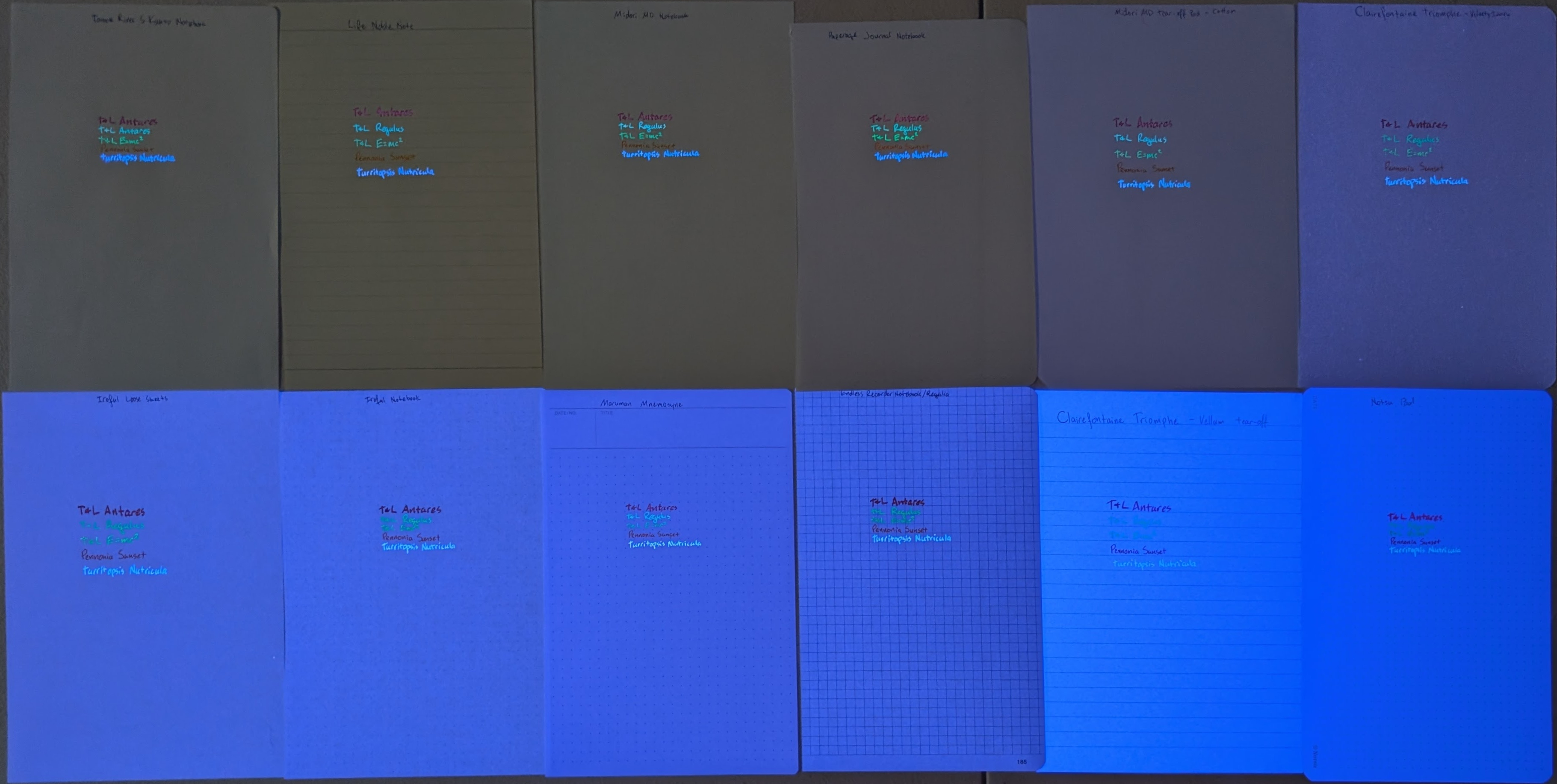
The differences are quite stark in the above photo, which has all of the papers I tested from least to most reactive in the numbered order of this post. There is a pretty steep increase in reactivity beyond the top row.
Any of the top three papers are excellent for use with fluorescent inks: Midori MD, Life Noble Note, or Tomoe River S Kanso. Honorable mention to Paperage and Midori MD Cotton.
Personally, I use Midori MD most often because of its consistency, cost, and availability.